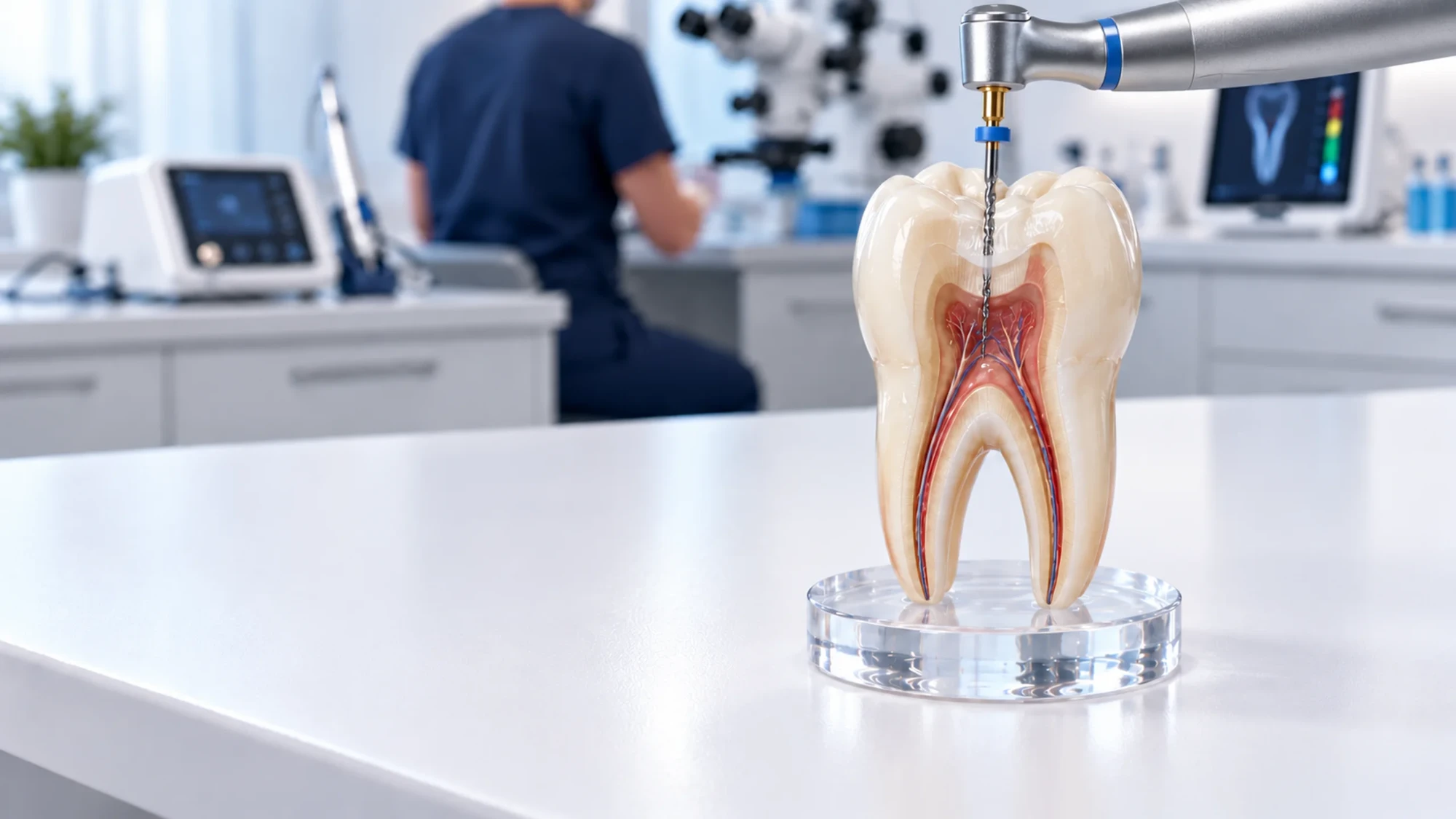
Short answer. During a root canal, the inside of the tooth is treated. The American Association of Endodontists explains that the affected pulp is removed and the canals are cleaned and sealed. Dental Nakeji presents the treatment as an option to help save the tooth and its function.
When is it considered?
Pain or discomfort may lead you to a consultation, but on their own they do not mean a root canal is needed. The professional examines the tooth and finds the cause. Inflammation or infection of the pulp is one of the situations in which this treatment may be recommended.
What happens afterwards?
Treating the canals is only one part of the care. The tooth also needs an appropriate restoration to protect it and let it work again. The type of restoration depends on how much tooth remains and on the bite evaluation; it will not always be the same.
Ask about the complete plan
It helps to know the diagnosis, what the treatment aims to save, which restoration would be needed afterwards and what follow-up is recommended. That way the treatment is understood as a process, not a single isolated appointment.